Modernizing enterprise delivery while scaling product velocity.
Utility providers manage millions of customer interactions every year. Billing inquiries, account status requests, reconnection processes, and administrative questions drive significant operational costs and increase wait times.
To tackle this challenge, one of Argentina’s leading natural gas distributors —handling over 87,000 monthly customers and averaging 3,971 daily interactions— embarked on a digital transformation journey. The goal was clear: migrate repetitive interactions to intelligent digital channels, cut traditional call-center costs, and address real customer friction without compromising support quality.
Together with Santex, the organization conducted an extensive Discovery and Business Analysis process, leveraging Speech Analytics and Natural Language Processing (NLP) over a dataset of 1,200+ actual support calls. This insight enabled the design of an AI-driven conversational strategy, UX optimization, and a dedicated Middleware architecture focused on operational efficiency and a measurable Return on Investment (ROI).

When support demand outgrows traditional legacy systems
The organization faced a critical operational bottleneck: 46.4% of customer interactions were concentrated in the phone channel, the business's most expensive support avenue. Deep-dive root-cause analysis revealed that the contact center was frequently acting as a "help desk" to handle failures occurring within digital and logistical processes.
Support demand was heavily concentrated around three critical friction points:
Compounding this was a legacy technology challenge: the company’s primary SAP interface used an asset-centric data model rather than a customer-centric one. This imposed a heavy cognitive burden on agents, forcing them to manually mine data across multiple tabs to reconstruct each customer’s history. The goal was not simply deploying a basic chatbot; it was redesigning the end-to-end customer experience.

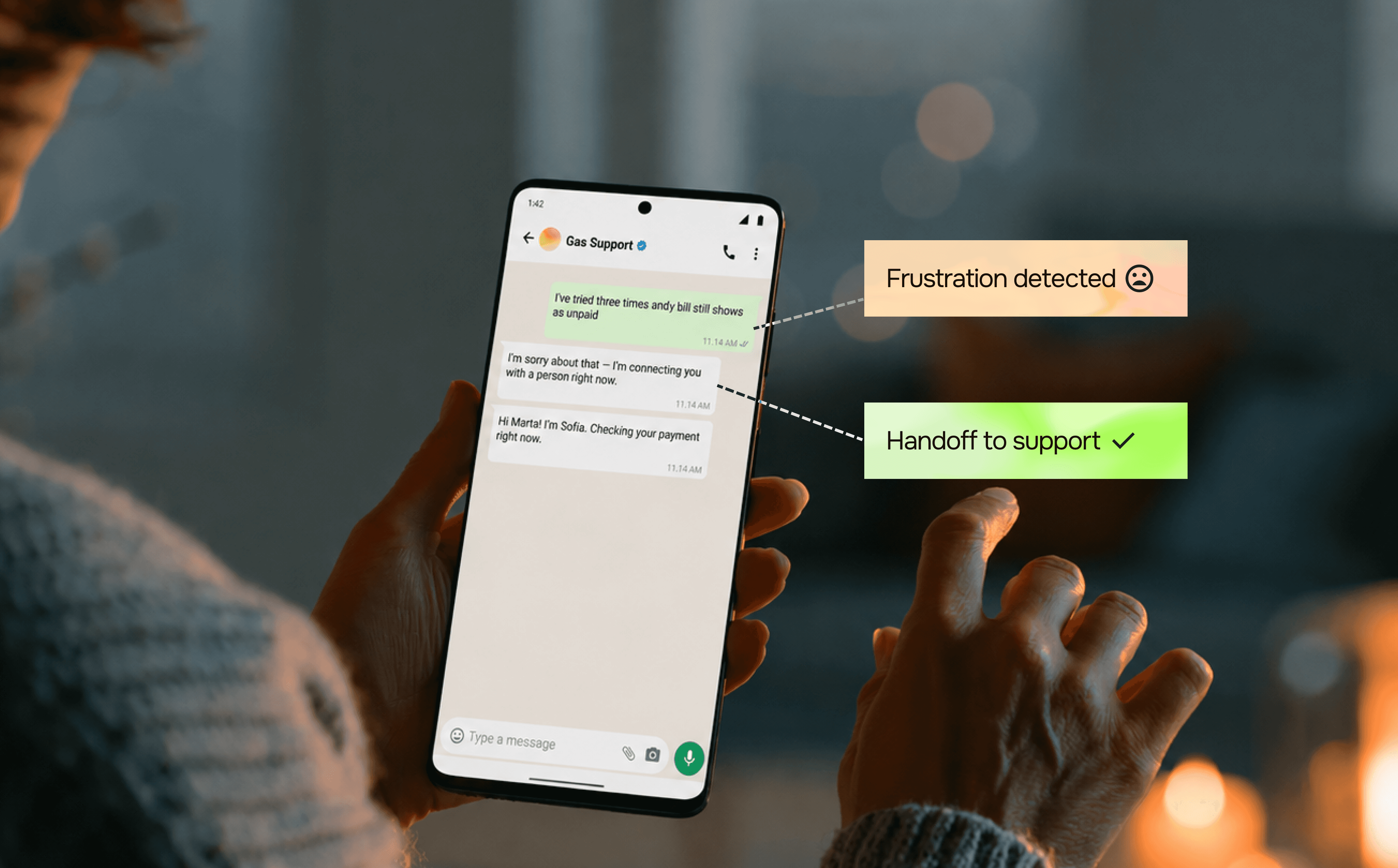
Conversational AI built to resolve, escalate, and drive measurable outcomes



A phased rollout strategy focused on adoption and continuous improvement
To balance modern innovation with the non-negotiable operational continuity of an essential utility service, Santex structured an agile roadmap aimed at maximizing time-to-value under a clear philosophy: first function, then understand, next automate, and finally consolidate.

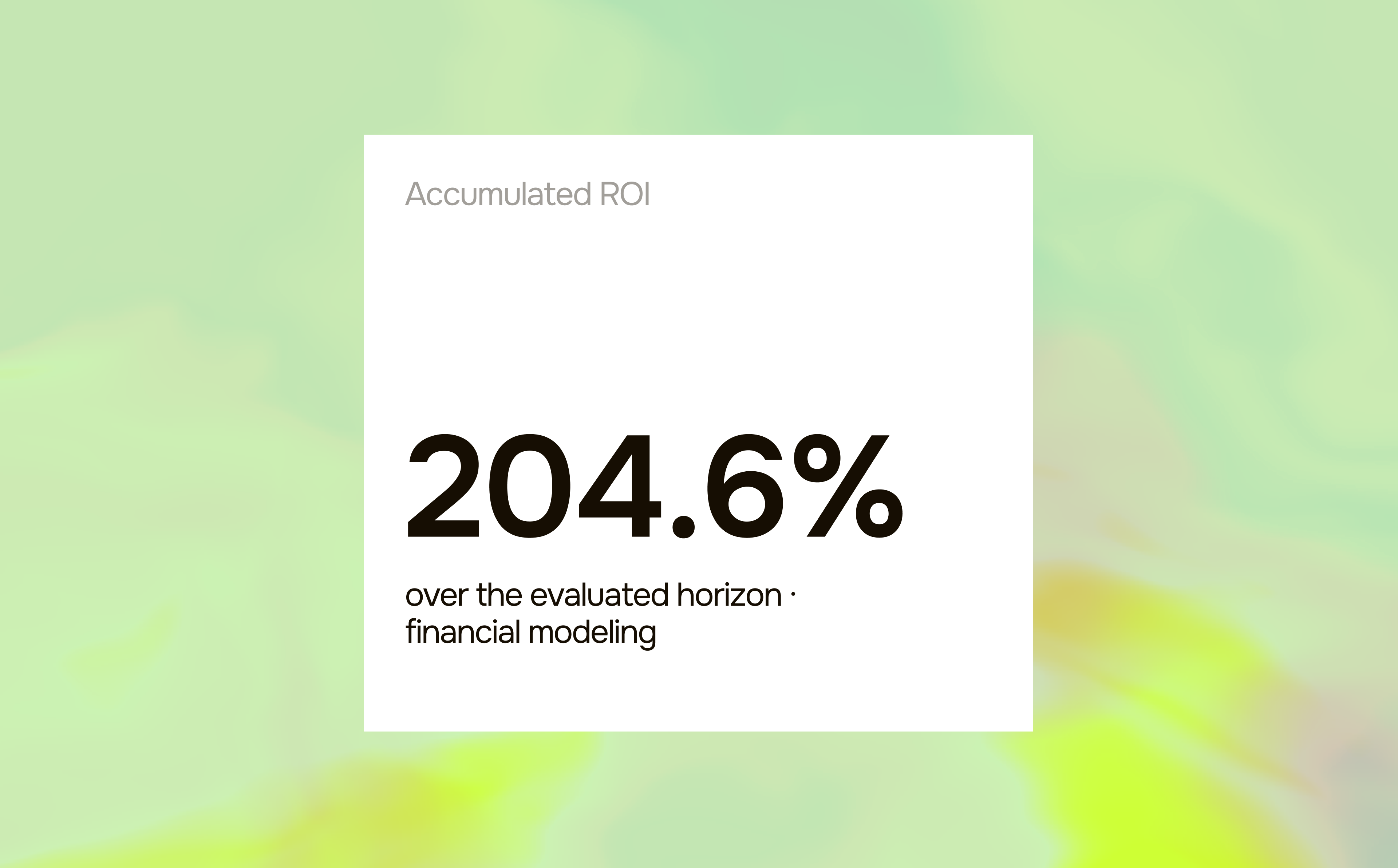
Tangible ROI and enhanced operational efficiency
By tying product strategy and artificial intelligence into user-centered design, the initiative unlocked a highly efficient, scalable service model backed by a rigorous KPI and OKR framework:
This project shows that driving major efficiency through generative AI does not require tearing down core infrastructure. It requires deploying intelligence strategically where customer pain and operational cost intersect.
Modernizing enterprise delivery while scaling product velocity.
Utility providers manage millions of customer interactions every year. Billing inquiries, account status requests, reconnection processes, and administrative questions drive significant operational costs and increase wait times.
To tackle this challenge, one of Argentina’s leading natural gas distributors —handling over 87,000 monthly customers and averaging 3,971 daily interactions— embarked on a digital transformation journey. The goal was clear: migrate repetitive interactions to intelligent digital channels, cut traditional call-center costs, and address real customer friction without compromising support quality.
Together with Santex, the organization conducted an extensive Discovery and Business Analysis process, leveraging Speech Analytics and Natural Language Processing (NLP) over a dataset of 1,200+ actual support calls. This insight enabled the design of an AI-driven conversational strategy, UX optimization, and a dedicated Middleware architecture focused on operational efficiency and a measurable Return on Investment (ROI).
When support demand outgrows traditional legacy systems
The organization faced a critical operational bottleneck: 46.4% of customer interactions were concentrated in the phone channel, the business's most expensive support avenue. Deep-dive root-cause analysis revealed that the contact center was frequently acting as a "help desk" to handle failures occurring within digital and logistical processes.
Support demand was heavily concentrated around three critical friction points:
Compounding this was a legacy technology challenge: the company’s primary SAP interface used an asset-centric data model rather than a customer-centric one. This imposed a heavy cognitive burden on agents, forcing them to manually mine data across multiple tabs to reconstruct each customer’s history. The goal was not simply deploying a basic chatbot; it was redesigning the end-to-end customer experience.
Conversational AI built to resolve, escalate, and drive measurable outcomes
A phased rollout strategy focused on adoption and continuous improvement
To balance modern innovation with the non-negotiable operational continuity of an essential utility service, Santex structured an agile roadmap aimed at maximizing time-to-value under a clear philosophy: first function, then understand, next automate, and finally consolidate.
Tangible ROI and enhanced operational efficiency
By tying product strategy and artificial intelligence into user-centered design, the initiative unlocked a highly efficient, scalable service model backed by a rigorous KPI and OKR framework:
This project shows that driving major efficiency through generative AI does not require tearing down core infrastructure. It requires deploying intelligence strategically where customer pain and operational cost intersect.