


Automation Doesn’t Mean Dehumanization: 5 Steps to AI Adoption for SMEs

AI adoption in an SME does not start with a tool. It starts with trust, clear processes, and a measurable use case. Here are five steps to automate without compromising culture, human judgment, or people’s role in the process.
The problem with AI is not implementing it. It is getting people to adopt it.
A tool can be rolled out in minutes. Getting people to make it part of how they work takes longer.
When that does not happen, many companies describe it as “resistance to change”. But behind that resistance are often valid questions: What is this for? How will my work change? Who will review its outputs? How will the data be used?
Adoption requires clarity, trust, and a method. Before choosing a platform, a company needs to understand what it wants to amplify: its response speed, its accumulated knowledge, or its relationships with customers.
AI should strengthen that advantage, not replace it with a generic process. That is why the starting point is not asking which tool to buy, but identifying where the operation is slowing down what the company already does best.
Step 1: Conduct an Honest Assessment
The assessment can begin with two questions:
Which processes consume the most time? Where do errors, rework, or delays occur most often?
The answers usually come from the people who carry out those processes every day. The goal is to identify where friction builds up and document the frequency, time involved, information required, and expected outcome.
At a minimum, identify the three processes that consume the most time and the three where the most efficiency is lost.
As Walter Abrigo explains when reflecting on the importance of measurement in transformation:
“If you want to change something—in yourself, your team, or your organization—start by measuring it. To transform something, you first need to understand it.”
Step 2: Start With What You Already Have
Measurement does not add bureaucracy. It turns a perception into a concrete opportunity for improvement. That is why, before purchasing a solution, it is worth observing how the work is currently being done.
For one week, the team can track which tasks are repeated. It can then experiment with a narrowly defined task using tools that are already available and approved.
The goal is to understand which part of the process can be simplified, how much time can be recovered, and where human interpretation is still required.
Clear boundaries must also be established. Personal data and confidential information should not be uploaded to tools the company has not evaluated, in line with the guidance we provide through our cybersecurity services.
Step 3: Find an Internal Champion
In almost every company, someone is already using AI: a salesperson preparing for meetings more quickly, an administrative team member who has simplified a spreadsheet, or an operations professional who has streamlined recurring requests.
Instead of imposing a tool, identify that person and give them space to share what they have learned.An internal champion connects a technological possibility with a real business problem. Adoption becomes more credible when learning is shared among peers.
Step 4: Build the Data Foundation Before the Solution
Artificial intelligence can process information, but it cannot invent context that a company has never documented.
If the same price appears differently across three spreadsheets, or exceptions exist only in one person’s memory, technology does not eliminate the disorder. It accelerates it.
A Forbes Argentina article on the AI mirage for SMEs argues that successful implementation depends not only on budget, but also on how well processes and data are organized.
Before automating, a company needs clear responsibilities, documented processes, and a reliable source of information.
If the problem and the expected outcome still cannot be explained clearly, the next step is to organize the operation.
Step 5: Build a Successful Use Case in 90 Days
Ninety days is not enough to transform an entire company. But it is enough to prove that a different way of operating is possible.
The first project should be summarized like this:
One process. One outcome. One story the team can see and believe.
It might involve preparing a quote, responding to internal requests, or following up on sales opportunities.
Before starting, the company must define how the outcome will be evaluated: hours recovered, fewer errors, faster response times, quality, and level of adoption.
A solution can work technically and still fail if nobody uses it. At the end of the pilot, the company should communicate what improved, what did not work, and which decisions will remain in human hands.
Automation Does Not Mean Removing People From the Process
Well-designed automation moves people from the center of repetitive work to the center of decision-making, reinforcing what makes human judgment irreplaceable.
Technology can search, organize, summarize, and execute. People still interpret context, oversee outcomes, and take responsibility.
Adopting AI does not mean abandoning judgment. It means recovering the time needed to apply it where it creates the most value.
Culture breaks down when decisions arrive without explanation and efficiency is pursued without considering the people involved.
Adoption Is Built Through Clarity
Real adoption begins when people understand what problem AI is solving, what will change in their work, how results will be measured, and why using it is worthwhile.
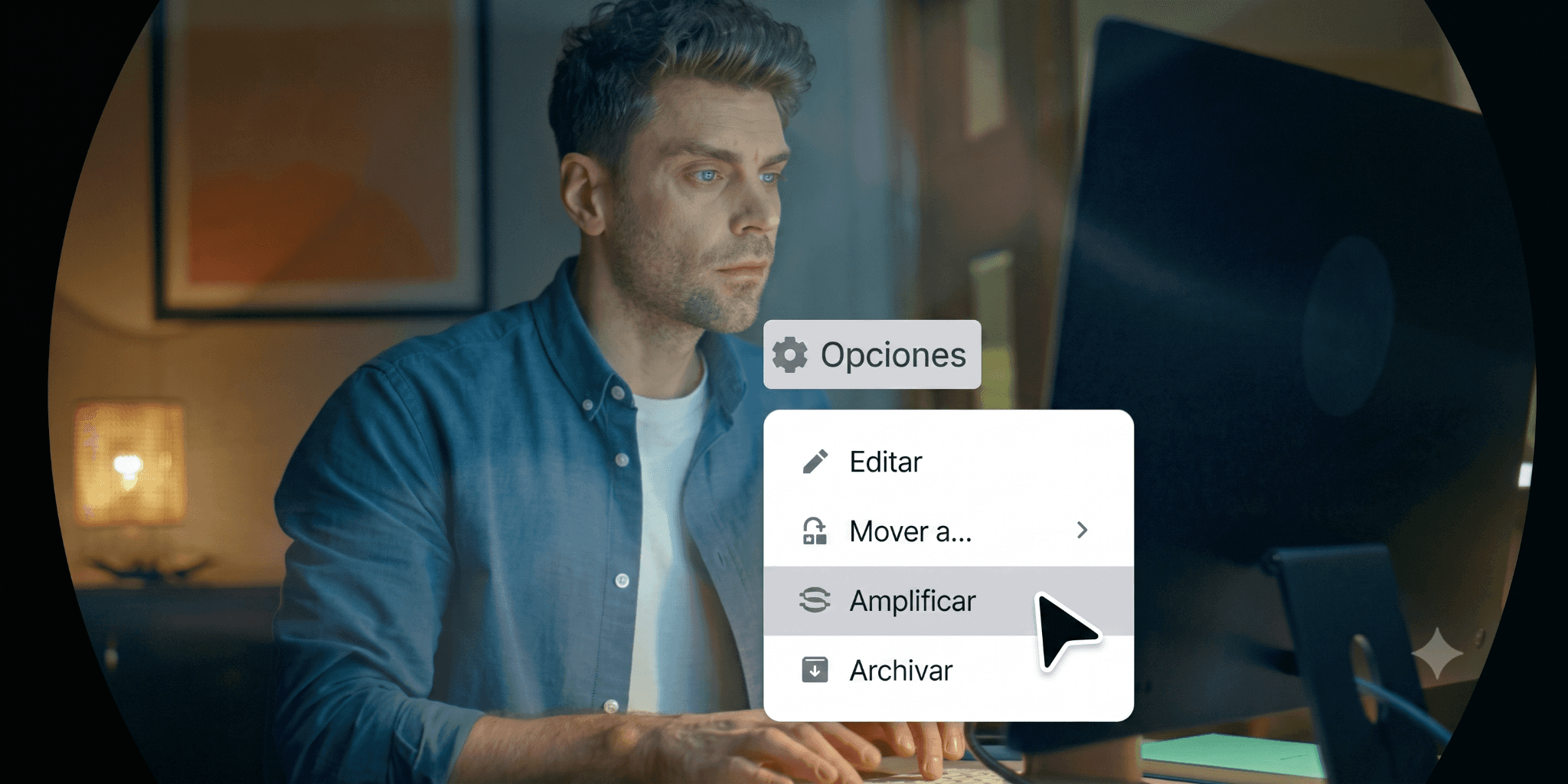
At Santex, we began by deploying AI agents across our own sales, marketing, and operations processes. That experience became the foundation of STX Agents: a solution that understands a process, its data, and its rules, and integrates into the channels where the team already works.
Discover STX Agents and identify which process in your operation could be the first to be automated:
Share on:




Stay Ahead with Expert Tips, Trends, and Insights
Get the latest content from Santex: ideas, tech updates, and resources that matter.
Like