
How technology can change our lives for the better

Can technology make us more human? Our General Manager, Walter Abrigo, shares how data and AI can boost well-being and leadership. From mindfulness to high performance: read the full article here.
These days, many people are afraid that our tools will replace us. But when used responsibly, technology can help us become the best version of ourselves, more in touch with our humanity than ever before.
At Santex, we want to bring humans and technology together. But what does this mean in practice? it means that technology can untap human potential.
We all use technology at work and in our everyday lives, to write, plan, create, design, and so on. But sometimes we forget just how much more our tools can do.
They can help us understand ourselves. They can track our health, daily habits, and physiological data. They can paint a picture of who we are — and help us become who we want to be.
How I changed my life
Almost a decade ago, I noticed something about myself.
I was living in a state of constant stress, worried about things beyond my control. I didn’t always notice this consciously, but my body definitely did. Being on high alert, all the time, was affecting my sleep, career, personal life, and happiness.
I was a slave to stress. So I decided to do something about it.
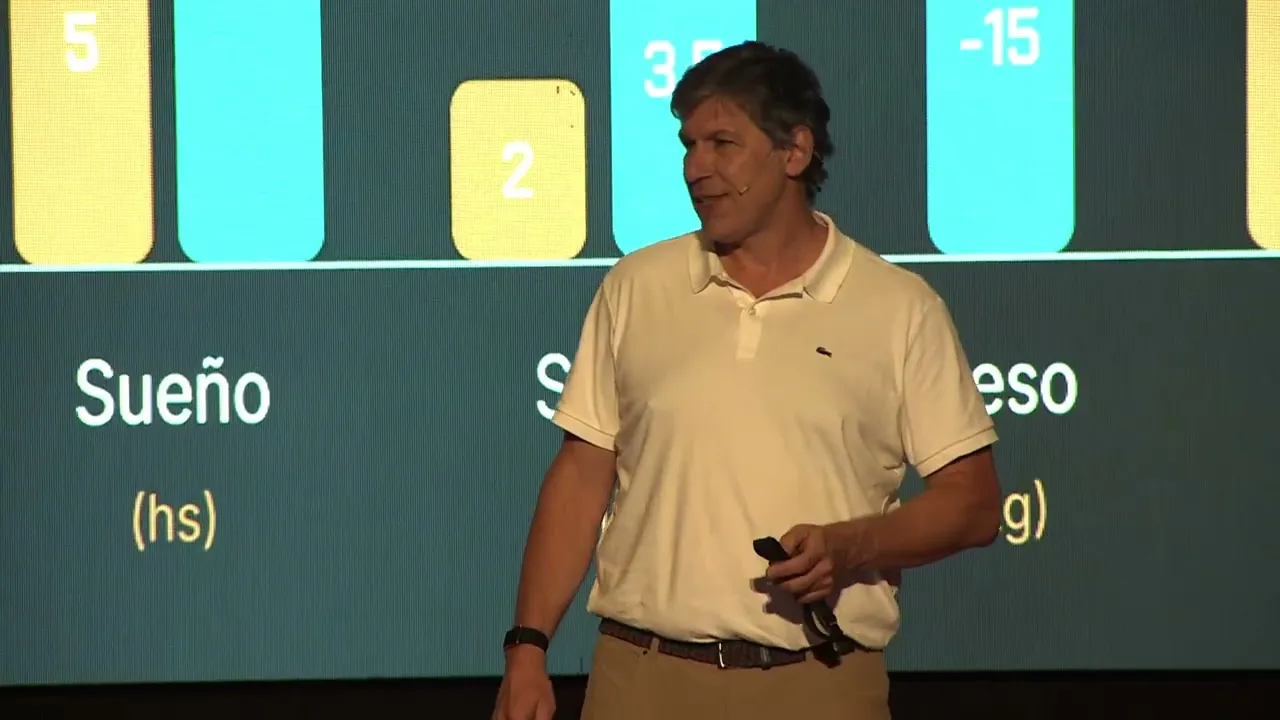
In my recent TEDx talk at UTN Córdoba, I shared how I began tracking my inner peace. Using smartwatches and specialized headbands, I measured my heart rate, brain activity, stress levels, breathing patterns, and more. And I meditated every single day.
This was a turning point for me.
I could finally understand what was happening inside my body. I set goals, changed my habits, and the results followed: over 30 pounds lost, more than seven hours of sleep a night, and a resting heart rate that dropped from 69 to 47 beats per minute.
This experiment taught me a key lesson. If you want to change something — about yourself, your team, or your organization — try measuring it. Before you can change it, you need to understand it.
This is how technology can help—at a time when it’s often viewed more as a problem than a solution.
Living in a digital world
According to the latest global data, we spend approximately 141 minutes a day on social media. That’s almost 860 hours a year: a whole month lost to Instagram, TikTok, Facebook, and so on.
Today, you can spend every waking hour connected to a screen or a pair of headphones. We exercise while listening to podcasts, eat while watching YouTube, and work on our computers or tablets. We never switch off.
But we have to. Our brains depend on it.
Excessive screen time has been linked to a host of problems, from a thinning cerebral cortex to reduced gray matter and an increased risk of dementia, stroke, and Parkinson’s disease.
It’s a bleak outlook, but we’re not powerless to change direction.
Through meditation and mindfulness, I discovered how deeply we can transform our minds, boosting brain connectivity, increasing neuroplasticity, firing up neurotransmitters linked to happiness and pleasure, reducing anxiety, and more.
This habit also taught me something else: the value of deep engagement.
All that multitasking we’re doing on our devices? It doesn’t work. We’re not really engaging in two or more activities at once. We’re just switching back-and-forth and doing everything badly.
To really excel in your personal life or career, you need to pay more attention, engage more deeply, and be present in the moment. Tackling one task at a time means you’re always giving your best. And technology, it turns out, can be an ally in this process.
Giving your best in life and on the court
Recently, I had a talk with Julio Lamas, a renowned basketball coach with over 20 years of experience leading club and national teams in Argentina, Spain, and Japan. We talked about leadership, team-building, and individual performance — and over the course of our hour-long conversation, it became clear that success in sports closely mirrors success in any other area of life.
As Lamas put it, if you want to perform consistently at a high level, there are no shortcuts.
You have to lock in and master your domain down to the smallest detail. You have to tolerate frustration and keep going, day after day. In other words, you have to practice deep engagement, consistently, whether you’re meditating or training on the basketball court.
And that’s where technology comes in. Our tools can either distract us or, paradoxically, help us focus and perform better.
Lamas explained this during our talk.
In modern sports, everything is tracked and measured. Athletes are supported by a team of experts, including sleep coaches, nutritionists, mental health specialists, kinesiologists, personal trainers, video analysts, and others, all using data intelligence to make better decisions.
That’s why athletes know how to improve on the court and in their daily lives: how much sleep they need and what they should eat, how to manage screen time and regulate stress.
To me, this is the true role of technology: to empower people and help us better understand ourselves — to see who we are today and who we can become tomorrow.
That’s when humans and technology truly come together.
Always learning,
Walter
Share on:



Stay Ahead with Expert Tips, Trends, and Insights
Get the latest content from Santex: ideas, tech updates, and resources that matter.
Like